If low-tech tanks had one golden rule, it would be this:
Light sets the speed of everything.
When you don’t inject CO2, you have less control over carbon availability. So if you blast high light, you’re basically asking plants to sprint while giving them a jogging pace oxygen tank.
Why too much light causes problems in low-tech tanks
Higher light increases photosynthesis demand, which increases the need for carbon (CO2) and nutrients. Without enough CO2, plants can’t fully utilise the available light, and that mismatch can open the door for algae to take advantage of the available resources.
This is exactly why low-energy tanks are described as needing less fertiliser, fewer water changes, and no CO2 — because slower growth means slower demand and fewer runaway imbalances.
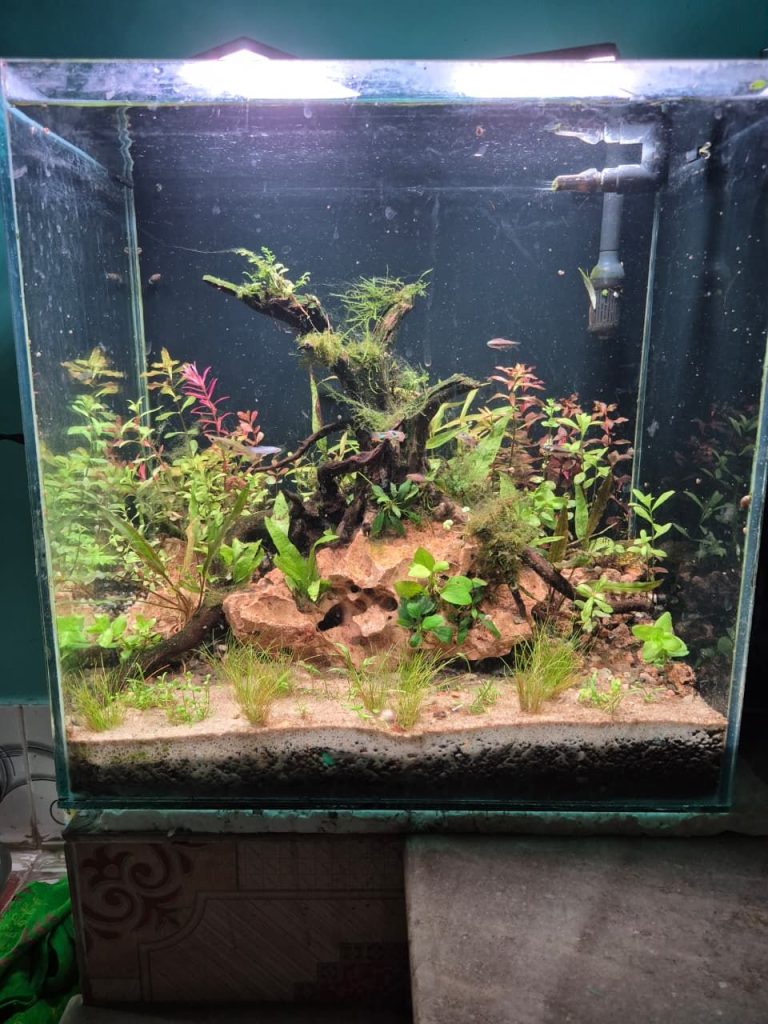
The friendly low-tech lighting setup that keeps people sane
Use a timer. Consistency beats perfect guessing.
Start with a shorter photoperiod, then increase slowly only if plants need it.
If algae appears, do not immediately buy five new products. Reduce light first. In low-tech tanks, reducing the “overabundant” factor is often more effective than adding more variables.+
What “balanced” looks like
Plants grow steadily (not explosively).
Algae exists but stays minor and manageable.
Your tank feels stable week to week, not like a rollercoaster.
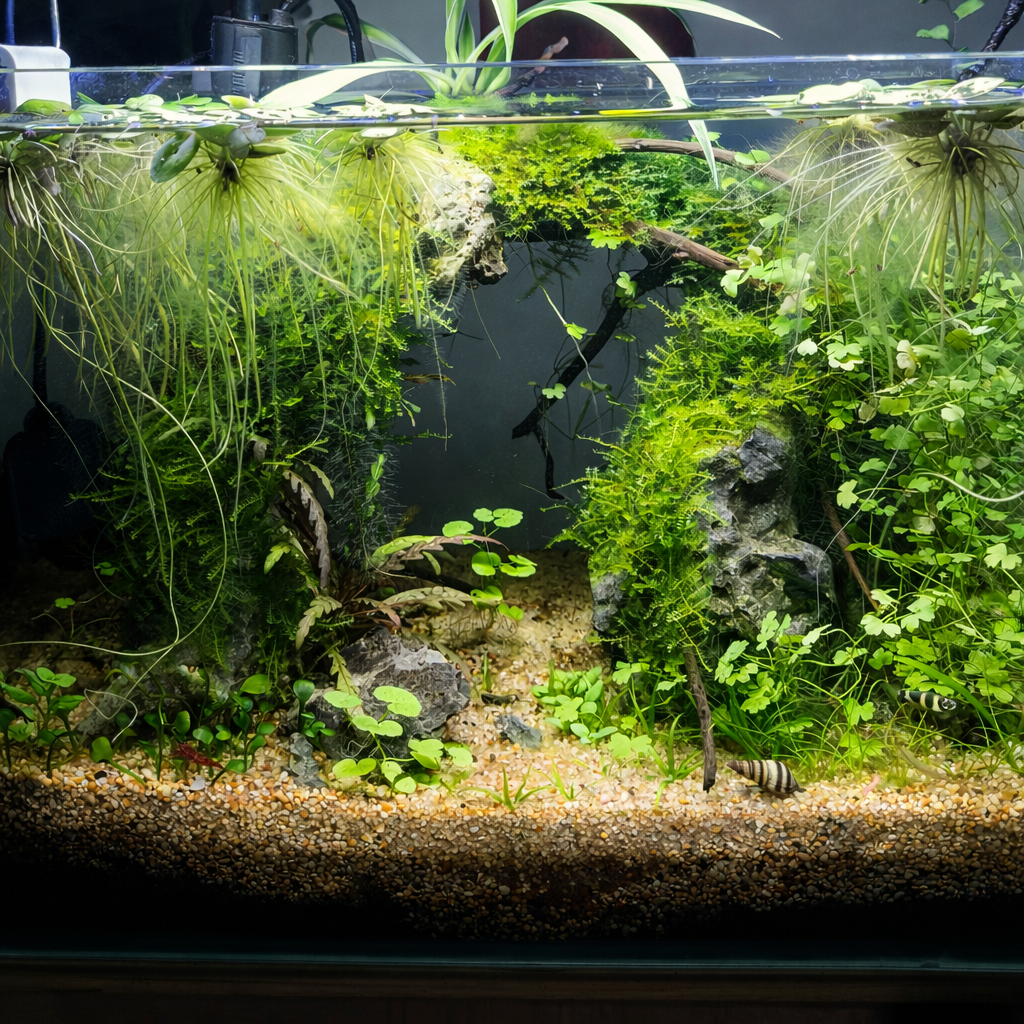
A small reminder: CO2 still exists in low-tech tanks
Fish respiration produces CO2, and surface agitation affects gas exchange, which influences how much CO2 stays dissolved in the water. Plant biomass also affects CO2 because plants consume it. So even without injection, CO2 is dynamic — you’re just not driving the steering wheel directly.
Before you go, check my shrimp game — just go on home and wake up the shrimp.
Quick summary (save this)
– Light sets the growth rate and demand for CO2 and nutrients.
– Low-tech tanks succeed by using lower light to match naturally available CO2.
– If algae appears in low-tech setups, reducing light is often the best first adjustment.
– Timers and slow adjustments create stability.