Aquatic plants can transform a simple tank into a healthy, beautiful ecosystem – even without fancy equipment. The following five hardy plants thrive in low-light, low-tech aquariums with no CO₂ injection needed. They’re beginner-proof and help keep your tank balanced by absorbing excess nutrients (like nitrates) that algae would otherwise use, thus naturally keeping algae in check. Let’s dive into this fun list of easy aquarium plants that require minimal care but offer maximum benefits!
1. Java Fern (Microsorum pteropus) – “Nearly Indestructible” Plant
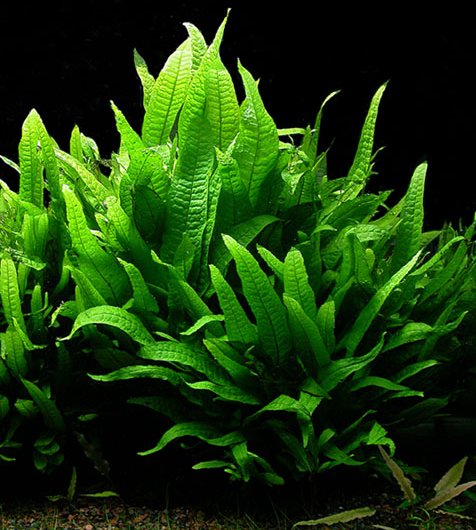
Java fern attached to driftwood in a low-tech aquarium. This classic plant tolerates a wide range of conditions and is very forgiving for beginners.
Java Fern is famous for being nearly indestructible – a true set-and-forget plant for any beginner. It tolerates low to moderate light and doesn’t need CO₂ or special fertilizers to flourish. Instead of planting in substrate, Java fern prefers to have its rhizome attached to rocks or driftwood (burying the roots can cause rot). Once secured, it steadily grows stiff, green leaves that can reach ~12 inches, providing a natural jungle look. Its hardy nature means even boisterous fish or occasional neglect won’t easily kill it. In short, Java fern is an easy-care plant that adds lush greenery and improves water quality with virtually no fuss.
2. Anubias (Anubias barteri var. nana) – Hardy Low-Light Specialist
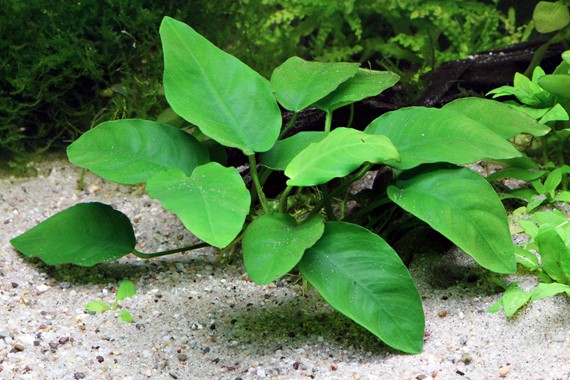
Anubias nana with its thick, dark green leaves. This slow-growing plant is extremely hardy and thrives even in shaded, low-tech tanks.
Anubias is another beginner-friendly, hardy plant that practically thrives on neglect. This West African genus grows in low-light conditions and is content without CO₂ or high nutrients. In fact, Anubias is so sturdy that aquarists often joke it’s nearly impossible to kill. Its short, thick rhizome can be attached to driftwood or rocks (avoid burying it) and will slowly sprout broad, waxy leaves. Growth is slow but steady, and those tough leaves can even withstand nibbles from herbivorous fish. Because it’s slow-growing, you might occasionally wipe algae off the leaves, but otherwise Anubias requires minimal care. This “nearly indestructible” plant is perfect for adding a lush, tropical touch to any low-tech tank without worrying about delicate care routines.
3. Hornwort (Ceratophyllum demersum) – Fast-Growing Nitrate Sponge
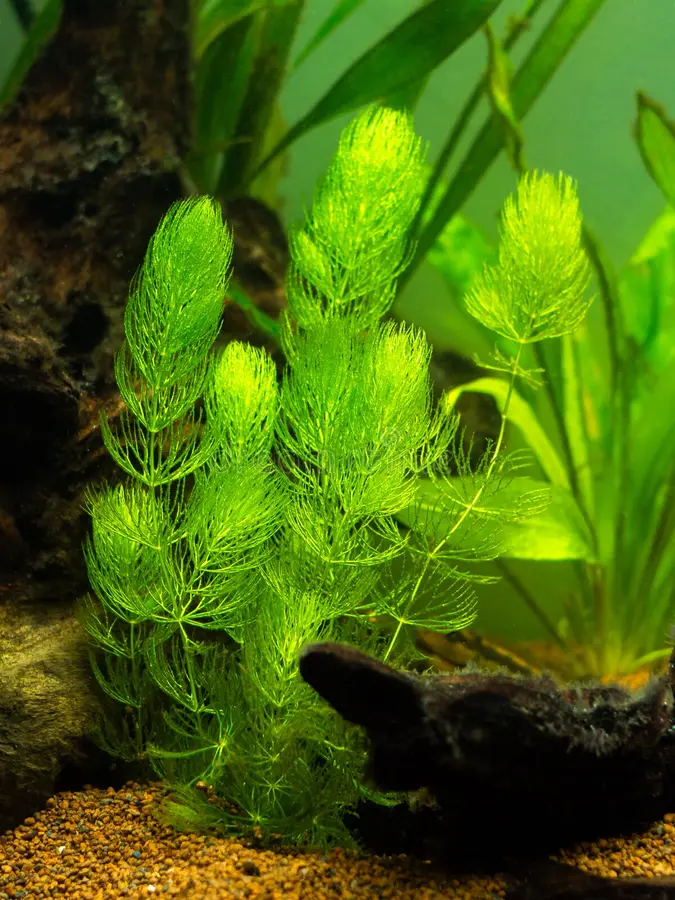
Floating stems of hornwort in an aquarium. Hornwort grows rapidly without roots, purifying water by soaking up nitrates and offering shelter for fish fry.
If you need a plant that grows like crazy and cleans the tank as it goes, Hornwort is the answer. This floating stem plant is extremely hardy – you can literally just toss a piece into your aquarium and it will start growing with no CO₂, no special substrate needed. Hornwort’s feathery green whorls absorb excess nitrates and other nutrients from the water, effectively starving out algae and stabilizing water quality. In a well-lit tank it grows astonishingly fast, potentially reaching several feet long, so regular trimming might be needed to prevent tangles. You can let it float freely or anchor it in substrate (it has no true roots either way). As a bonus, its dense, bushy foliage provides excellent hiding spots for baby fish and shrimp. Hornwort’s fast growth and nutrient uptake means cleaner water (often leading to fewer water changes for you) and an aquarium that stays balanced and healthy.
4. Anacharis (Egeria densa) – Beginner’s Waterweed
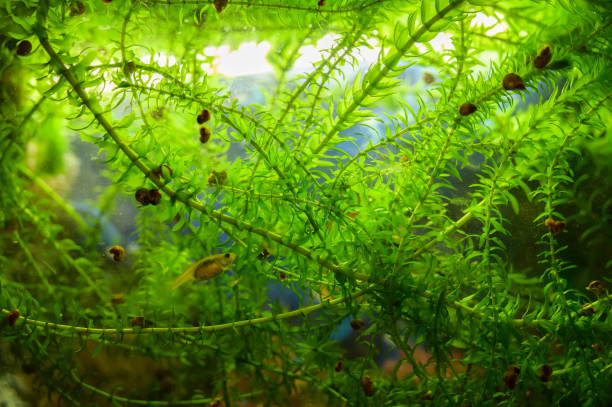
Anacharis, also known as Brazilian waterweed, is a fast-growing stem plant that practically defines “easy care.” It’s so adaptable that hobbyists joke it could grow in a bucket – or even a toilet – given half a chance! This plant thrives in low light and doesn’t require any CO₂ or fancy fertilizers to do well. Simply place bunches of Anacharis in your tank by planting the stems in gravel or letting them float freely – either way, it will take off. As it grows, Anacharis sucks up nutrients (like nitrates from fish waste), cleaning the water and naturally outcompeting algae. Its stems can easily reach the top of the tank, so feel free to trim and replant cuttings to propagate more. Rapid growth, hardiness, and water-cleaning abilities make Anacharis a staple for beginners looking to maintain a healthy, algae-free aquarium with minimal effort.
5. Amazon Frogbit (Limnobium laevigatum) – Floating Plant for Balance

Amazon frogbit floating on the surface. The round, spongy leaves form a green “lid” that shades the water and the dangling roots soak up excess nutrients, starving algae.
Amazon Frogbit is a beloved floating plant that brings both beauty and balance to low-tech tanks. With its little green lily-pad-like leaves, frogbit quickly forms a lush cover on the water’s surface. This floating canopy isn’t just for looks – it shades the tank below, helping to reduce algae growth, and its long, sponge-like roots absorb toxins and nutrients like a natural filter. In a low-tech setup (even with just ambient room light or gentle LEDs), frogbit will multiply rapidly. It’s great for nutrient control and algae prevention: by gobbling up nitrates and other waste, frogbit leaves algae with nothing to thrive on. Fish and especially shrimp love hanging out in the dangling roots, which provide shelter and feeding spots. Just be sure to leave some open surface area for gas exchange (don’t let it cover the entire top for too long) and scoop out excess plants occasionally to keep growth in check. Overall, Amazon frogbit (and other floaters like duckweed or water lettuce) are fantastic “instant fix” plants for beginners – they require no planting or CO₂ yet significantly improve water quality and stability in the aquarium.
Summary
All of these plants – from the nearly indestructible Java fern and Anubias to fast growers like Hornwort, Anacharis, and Frogbit – can thrive in low-tech, no-CO₂ tanks while actively helping you maintain a healthier aquarium. They tolerate low light, “live off” fish waste, and fight algae naturally by absorbing nutrients that would otherwise cause algae blooms. For a beginner, that means less hassle, fewer water chemistry problems, and a more forgiving tank. By adding a few of these hardy plants, you’ll not only make your aquarium look more vibrant and natural, but you’ll also create a stable environment where fish and other critters can flourish. Minimal care, maximum benefits – these five plants prove that you don’t need CO₂ injection or a green thumb to enjoy a lush, balanced aquarium!
Sources: These recommendations are supported by aquarium experts and hobbyist resources, confirming the ease and benefits of each plant. For example, Java fern’s indestructible reputation and low-light tolerance are well documented, and Anubias is widely noted for its hardy, slow-growing nature that survives in virtually any tank conditions. Fast growers like Hornwort and Anacharis are praised for devouring nitrates and improving water quality, while floating plants such as frogbit are known to be nutrient sponges that curb algae and stabilize tanks. All in all, these plants are proven, beginner-proof choices to kickstart a thriving low-tech aquarium. Enjoy your green, growing success!