Let’s make this topic less scary, because people love to scream “anaerobic pockets!” like it’s a horror film.
Your substrate is not one uniform thing. It’s a gradient.
Why zones form at all
In waterlogged sediment, oxygen does not travel far. Oxygen diffusion is far slower in water than in air, and oxygen gets consumed quickly by aerobic microbes and roots. That combination naturally creates oxygen-poor conditions below the surface in many wet soils and sediments.
Studies measuring sediment oxygen profiles show oxygen penetration depths can be only a few millimetres, and factors like temperature can increase sediment oxygen demand and make oxygen penetrate less deeply.
So yes: it is normal for deeper substrate to be less oxygenated than the water above.
What happens in aerobic zones (oxygen available)
In oxygenated zones, microbes can do aerobic processes, including nitrification. Nitrification converts ammonia to nitrite and then nitrate — an aerobic pathway central to aquarium stability.
What happens in anaerobic or low-oxygen zones
In low-oxygen zones, microbes use alternative pathways. One important pathway in nature is denitrification: converting nitrate through intermediate steps to nitrogen gas, returning nitrogen to the atmosphere.
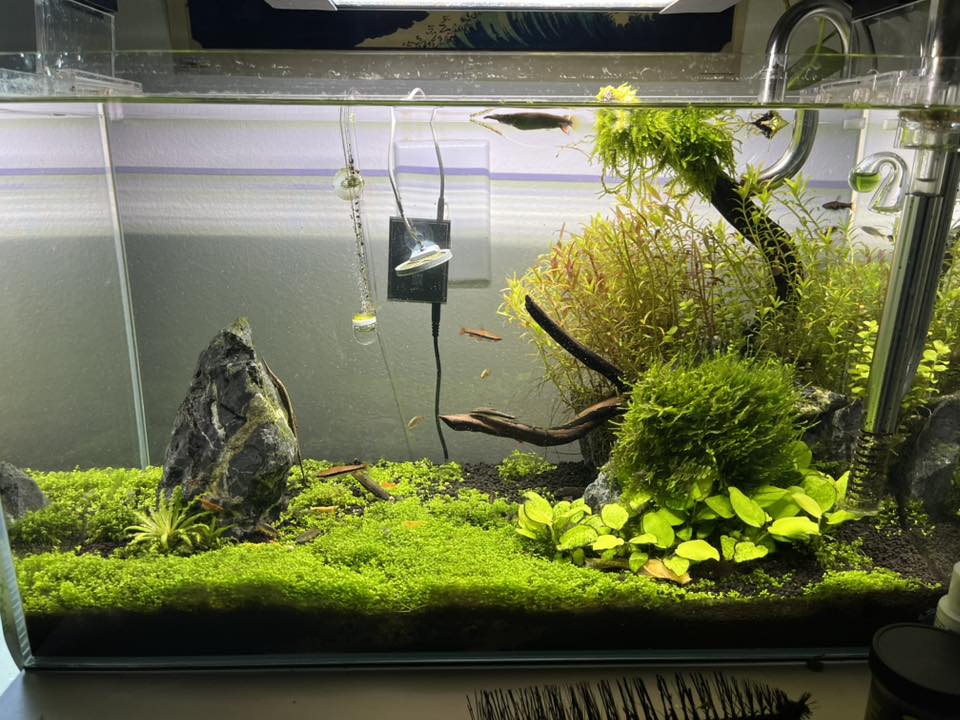
Also, in anaerobic sediments, sulfate reduction to hydrogen sulfide is common, driven by sulfate-reducing bacteria. The key nuance: those sulfides can be re-oxidised back to sulfate when oxygen becomes available. That means “sulfide production” and “sulfide harm” are not identical statements — exposure time, oxygen presence, and concentration matter.
Plants can soften the boundary
Wetland and aquatic plants can leak oxygen from roots into surrounding sediment (radial oxygen loss), creating tiny oxygenated zones around roots even when the bulk sediment is oxygen-poor. That creates a micro‑gradient: aerobic close to roots, anaerobic further away.
In aquarium terms, dense healthy root systems can help keep the substrate behaving “alive” rather than “stagnant”.
The keeper takeaway: aim for “healthy gradients”, not sterile perfection
A little anaerobic activity in sediment is normal ecology. The real problems usually come from excess organic loading plus poor oxygen movement, which can push the system into root damage and water quality issues along with destroying long-term nutrients.
Before you go, check my shrimp game — just go on home and wake up the shrimp.
Quick summary (save this)
– Oxygen drops quickly with substrate depth because diffusion is limited and consumption is high.
– Aerobic zones support nitrification (ammonia → nitrite → nitrate).
– Anaerobic zones can support denitrification and sulfate reduction, depending on conditions.
– Plant roots can leak oxygen and create micro‑zones that support healthier substrate function.