When people say “soil” in aquariums, it triggers two reactions:
1) “That sounds natural and lovely.”
2) “That sounds like a disaster waiting to happen.”
The truth is: soil is powerful, and power needs management.
Soil is a nutrient bank
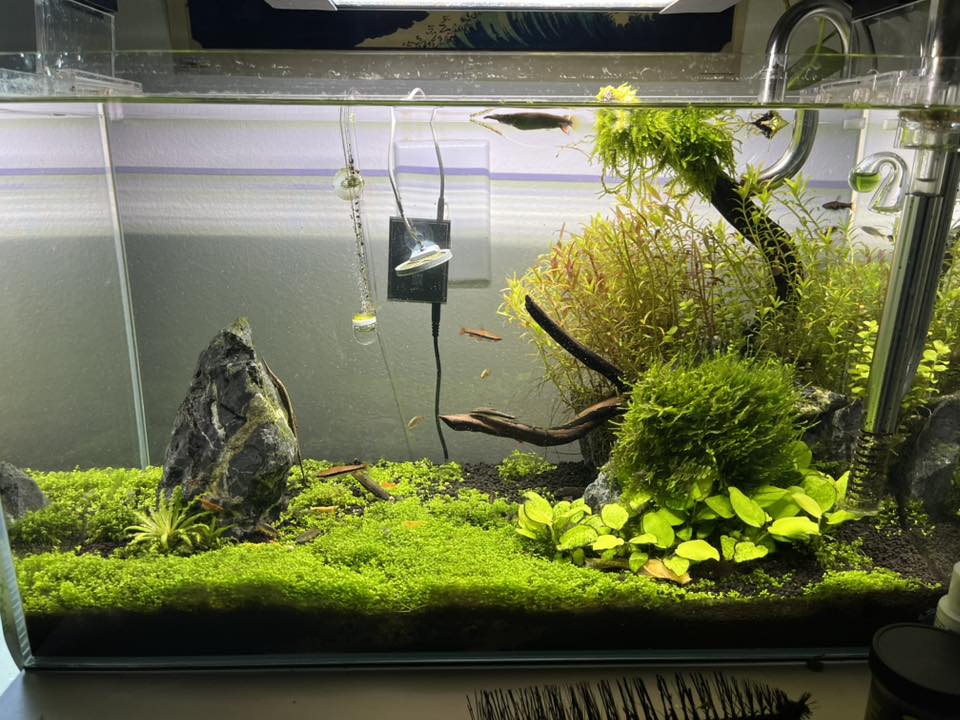
In soil-based planted tanks, the underlayer acts like a pantry. It stores nutrients, releases them gradually, and supports rooted plant growth in a way plain inert gravel cannot.
In practical planted-tank terms, this means you can often grow stronger root systems and sustain plant growth longer without constantly dosing the water column.
Soil is also a microbial engine
Soil contains organic matter that decomposes. That decomposition releases dissolved organic carbon and gases like CO2; in a new setup, this can help plants because submerged plants often crave carbon, especially early on.
But decomposition also consumes oxygen. And oxygen in waterlogged environments is precious because oxygen diffusion is dramatically slower in water than air, and microbes and roots can consume it quickly. That is why soils tend to develop oxygen gradients even when the water above is well oxygenated.
Soil “seeds” the tank, but it can also overwhelm it
One of the most useful observations from Walstad-style practice is that soils can “seed” biological activity rapidly, including nitrifying bacteria and other microbial communities, which can help a tank establish faster.
At the same time, too much decomposing organic matter, too thick a cap, or poor circulation can push sections of substrate into deeper anaerobic conditions than your plants can handle. When that happens, roots suffer, plants melt, and the water can get cloudy from bacterial growth stimulated by released organics.
The friendly rule: soil is a bank account, not a debit card
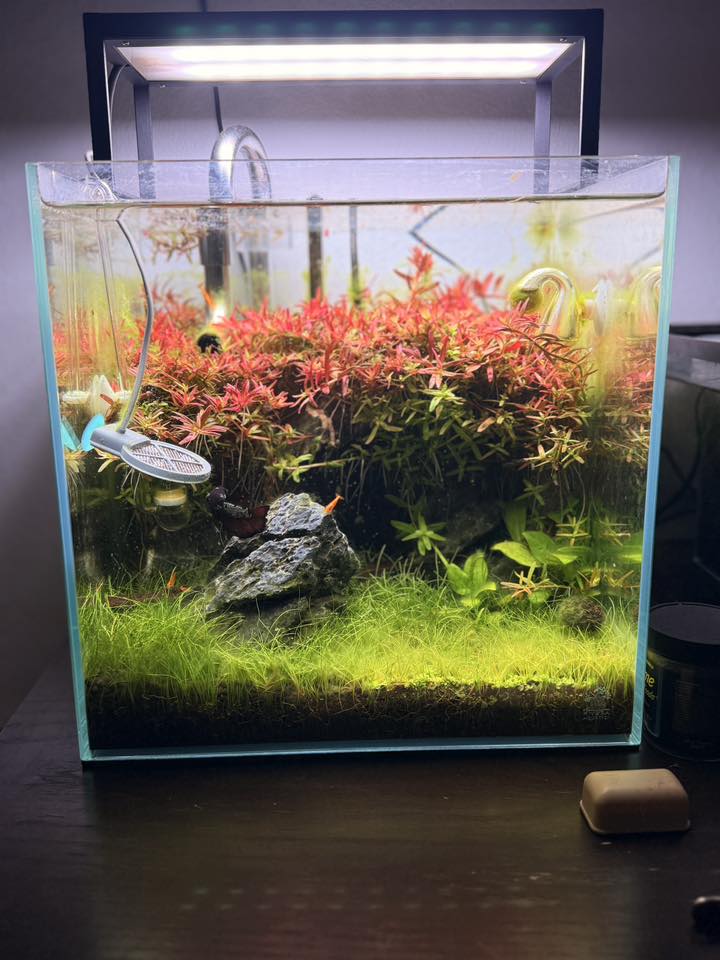
If you “spend” soil nutrients slowly (low-tech light, steady plant mass, sensible feeding), soil can run a beautiful tank for a long time.
If you “spend” fast (high light, heavy feeding, unstable planting), soil can dump more nutrients into the system than the plants can process, and algae will happily accept the donation.
Before you go, check my shrimp game — just go on home and wake up the shrimp. Quick summary (save this)
– Soil acts as a nutrient reservoir that supports rooted plants strongly.
– Decomposition releases CO2 and dissolved organics, fuelling biology and sometimes cloudiness.
– Oxygen drops fast in waterlogged soils, creating layered micro‑zones.
– Too much organic load or poor oxygenation can damage roots and destabilise the system.