If you’ve ever stared at a new tank thinking, “Why does everyone keep talking about cycling like it’s a sacred ritual?”, you’re not alone. I did the same. And honestly, the nitrogen cycle sounds scarier than it is.
Here’s the simplest way I can put it: fish (and shrimp) produce waste, leftover food breaks down, and all that breakdown creates ammonia. Ammonia is the problem child in a new aquarium because it builds up quickly and living things do not enjoy it. The goal of “cycling” is to grow the right microbes so ammonia gets converted into less harmful forms.
The three main nitrogen steps (the version you actually need)
Ammonia → nitrite → nitrate.
That’s the headline. The chemistry behind it is that nitrification is a microbial process where ammonia is oxidised to nitrite, and nitrite is oxidised to nitrate. These steps are typically done by different groups of nitrifiers, and they require oxygen (so they thrive on surfaces with flow).
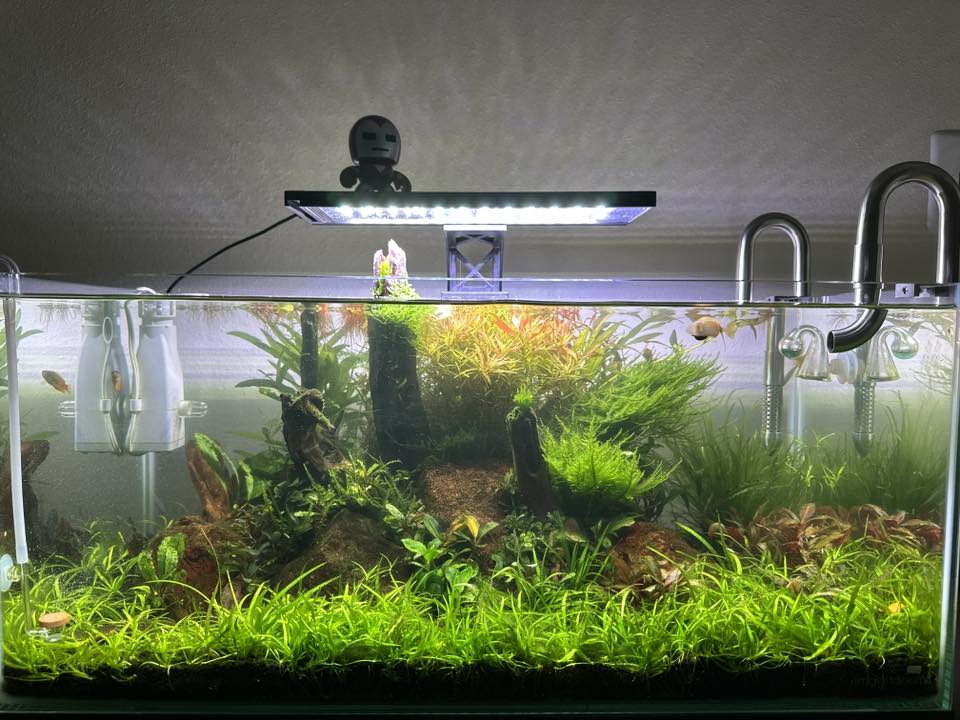
Nitrate is not “nothing”, but it’s usually far less immediately toxic than ammonia or nitrite, which is why the cycle is framed as “detoxifying” waste. Your job as the keeper is to stop ammonia and nitrite spikes, then manage nitrate and other organics long‑term with plants, maintenance, and sensible stocking.
“Beneficial bacteria” are mostly surface biofilms, not magic water juice
One of the biggest mindset shifts: the microbes you’re trying to establish mostly live on surfaces — filter media, gravel, glass, plant leaves, decor — not floating around like fairy dust in the water column. That’s why tanks with lots of surface area (and steady water movement) tend to stabilise faster than bare boxes.
And here’s a genuinely interesting science twist: older aquarium talk often name‑drops Nitrosomonas and Nitrobacter as the main “cycling bacteria”. Those organisms can exist, but research on freshwater aquaria found nitrite oxidation was linked to Nitrospira-like bacteria and not dominated by Nitrobacter in the way people assumed.
On top of that, multiple aquarium studies have found ammonia‑oxidising archaea can be dominant ammonia oxidisers in many aquaria. In other words: your tank’s nitrification team may not match the classic names people learned decades ago, but the function still happens.
Cycling is really “maturing”
I like thinking of cycling as “maturation” instead of a finish line you sprint to. In the early weeks, the tank is basically organising a whole new microbial community: biofilms forming, microbes competing, plants adjusting, and your substrate starting to behave like an ecosystem instead of a sterile layer.
That’s why rushed stocking is when people get hurt feelings. Not because you’re a bad person — because the system physically cannot process that much waste yet.
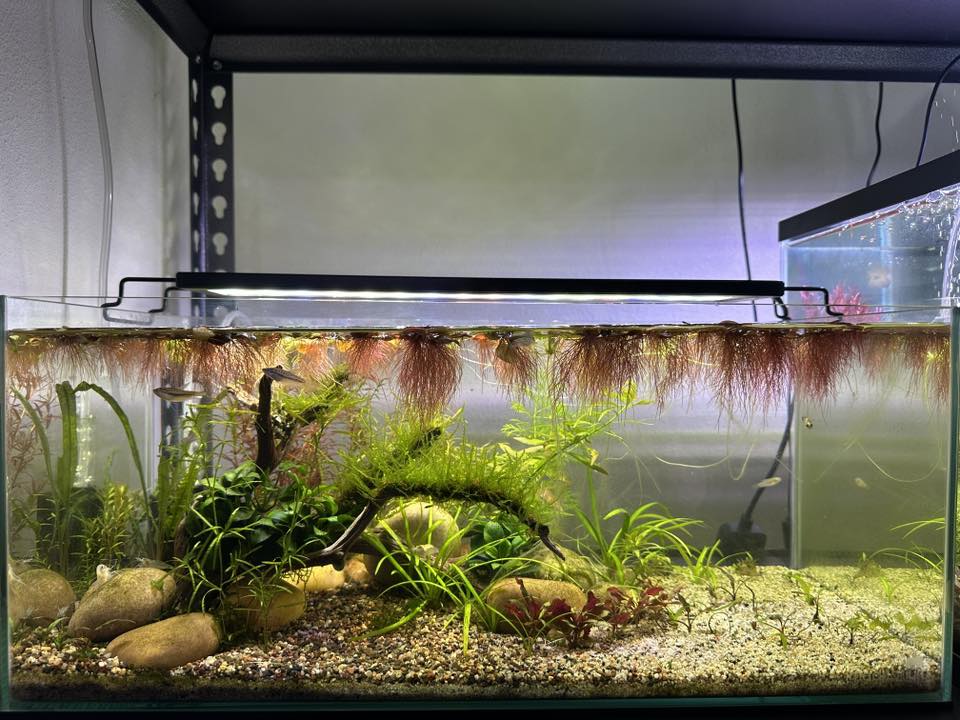
Beginner-friendly cycling habits that actually help
Keep feeding light. In a brand-new tank, overfeeding is like dumping rubbish into a house with no bins.
Give surfaces and flow a chance. Whether you use a filter or not, aim for stable oxygenated water circulation because nitrification is aerobic.
Test in the early weeks. It’s not forever, but early testing helps you learn your tank’s pattern and avoid surprises.
If you want a planted approach, I strongly recommend reading the next post (plants change the game).
Before you go, check my shrimp game — just go on home and wake up the shrimp. Quick summary (save this)
– Cycling is microbial maturation that converts ammonia to nitrite to nitrate.
– Many freshwater tanks rely heavily on Nitrospira-like nitrite oxidisers, not only the classic names.
– Aquarium studies often find ammonia‑oxidising archaea are major ammonia oxidisers.
– More surface area and steady oxygenated flow generally help nitrification establish.