This is the post that quietly fixes people’s tanks, because it stops the random guessing.
Nutrient limitation means growth is constrained by whichever essential resource is most scarce relative to demand. It’s associated with classic “law of the minimum” thinking, but modern science also recognises that limitation can shift, and co‑limitation is common in real ecosystems.
Why this matters in aquariums
Because aquariums are tiny ecosystems with inputs and outputs.
Inputs: fish food, tap water minerals, decaying leaves, fertilisers, soil nutrients.
Outputs: plant trimming, water changes, filtration, microbial processes like denitrification under the right conditions.
If you increase one key factor (like light) without increasing what plants need to use that light (like carbon and nutrients), you create an imbalance. Plants stall, algae often accelerates, and you feel personally attacked by green fuzz.
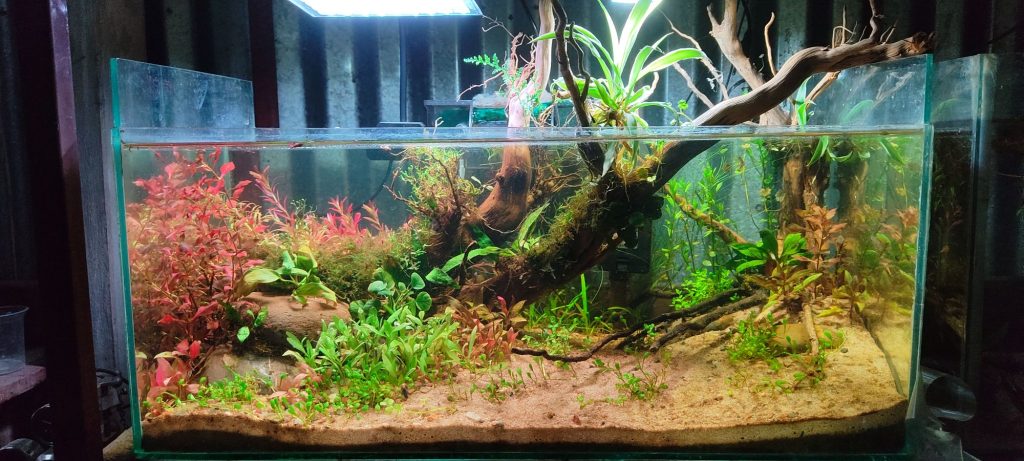
“Limiting nutrient” is not always the same nutrient
In natural freshwater systems, phosphorus has historically been considered a frequent limiting nutrient, and UK environmental guidance explicitly describes phosphorus as the main cause of eutrophication in freshwaters, while nitrogen can also contribute in some situations.
At the same time, modern lake science and meta-analyses show nitrogen limitation can be common too, and nutrient limitation can vary by site and time.
So the correct beginner takeaway is not “phosphate is always the issue” or “nitrate is always the issue”. The correct takeaway is: limitation is contextual.
In planted aquariums, carbon is often the sneaky limiter
On land, CO2 is abundant. Underwater, CO2 availability is far more constrained, and CO2 levels can vary with surface agitation, fish respiration, and plant biomass.
If you run strong light in a tank without injected CO2, carbon often becomes “the limiting resource” because plants try to photosynthesise faster than the available carbon can support. That mismatch is one reason low-tech tanks typically use lower light.
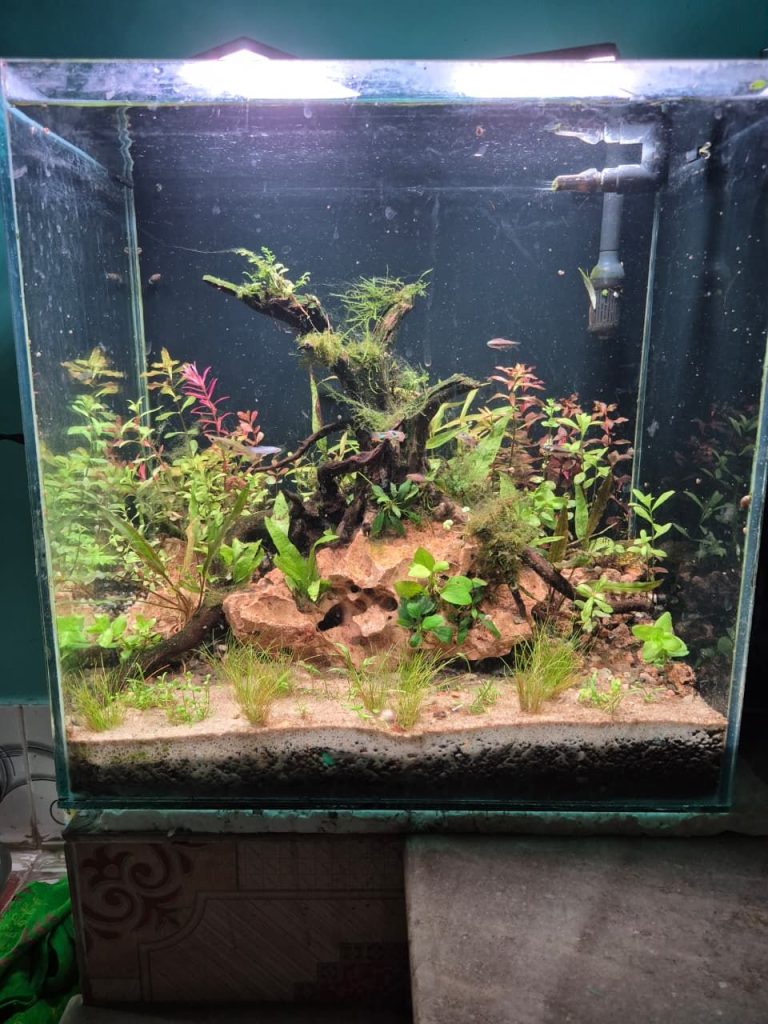
How to use nutrient limitation without overthinking
If plants are pale: could be nutrient shortage, but it might also be too much light driving demand.
If plants grow but algae also grows: your system may have plenty of nutrients but poor plant advantage (often light/CO2 mismatch).
If everything is slow but stable: that might be a healthy low-tech equilibrium.
Before you go, check my shrimp game — just go on home and wake up the shrimp.
Quick summary (save this)
– Growth is constrained by what’s scarcest relative to demand; limitation can shift and co‑limitation exists.
– In freshwaters, phosphorus often matters strongly, but nitrogen can also be limiting depending on context.
– In planted aquariums, carbon limitation is common without injected CO2, especially under higher light.
– The practical move is balancing, not chasing one “magic nutrient”.