A low-tech tank is basically the “slow cooking” version of planted aquariums.
In planted-tank language, “low-tech” usually means no pressurised CO2 injection and lower light than high-energy aquascapes. Plant growth is slower, the tank is more forgiving, and maintenance can be simpler if you don’t overcomplicate it.
Why low-tech works for so many people
Because it matches constraints.
If you don’t inject CO2, you generally can’t support the same growth speed as high CO2 systems. That’s not a moral failure — that’s physics and plant biology. So low-tech tanks “solve” the mismatch by using lower light intensity and a calmer pace.
Lower lighting can also restrict nuisance algae growth and makes the tank more forgiving if you miss a maintenance task occasionally.
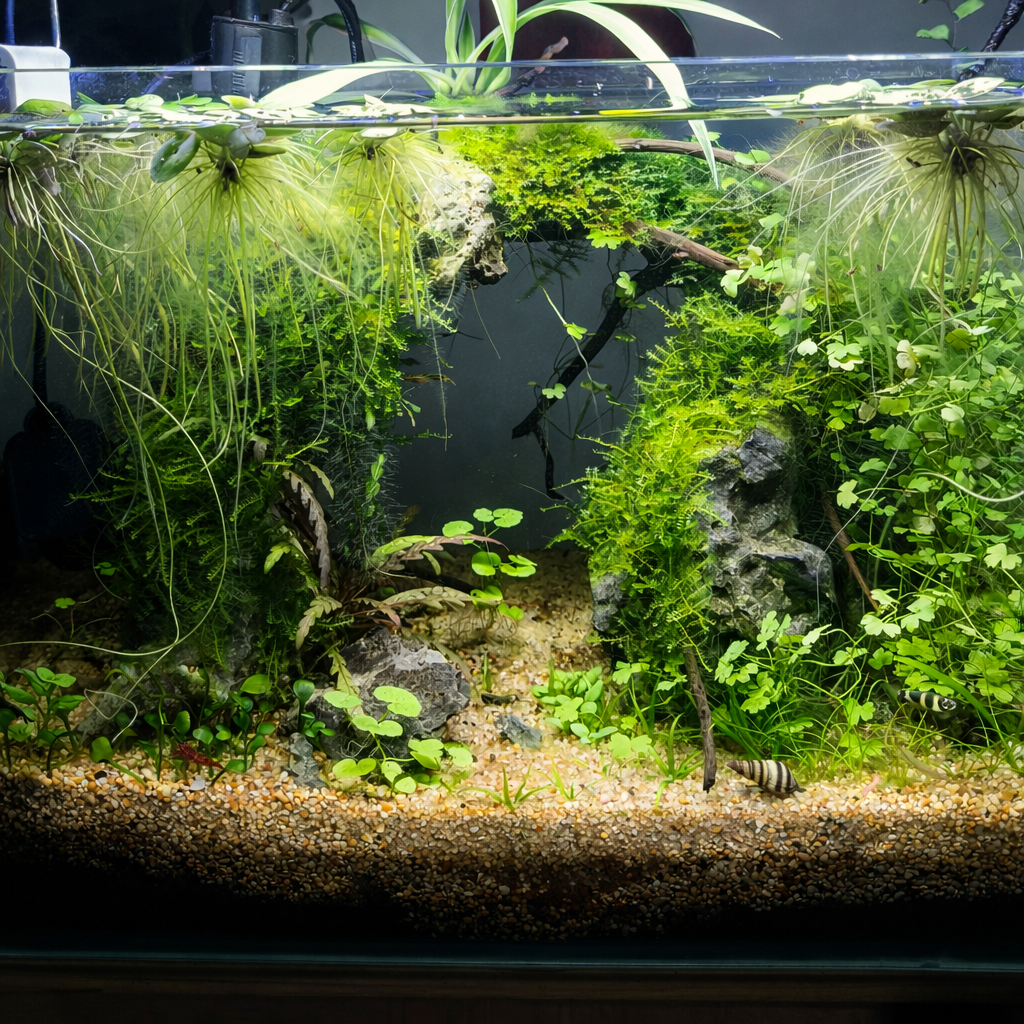
What a low-tech setup looks like (in real life
Here’s the friendly version, similar to how I actually set up tanks:
Select an aquarium that fits your space and is suitable for a planted tank (even a small tank works, but around 20–40 litres is a nice beginner comfort zone). Place it on a sturdy, level surface away from direct sunlight (to reduce overheating and algae pressure). Rinse the tank with water only (no soap) if it’s new or dusty. Gather everything before you start — substrate, plants, water conditioner, hardscape — because a calm setup is a successful setup.
Then keep it simple: decent substrate, lots of easy plants, a light on a timer, and patience.
What low-tech is not
Low-tech is not “set it and forget it forever”. It’s not “no testing ever” for every keeper. It’s not “plants grow perfectly in the dark.” It’s simply a lower-energy balance point.
The win is that you have fewer variables to juggle: you’re not dialing CO2, you’re not pushing extreme light, and you’re not trying to force rapid growth.
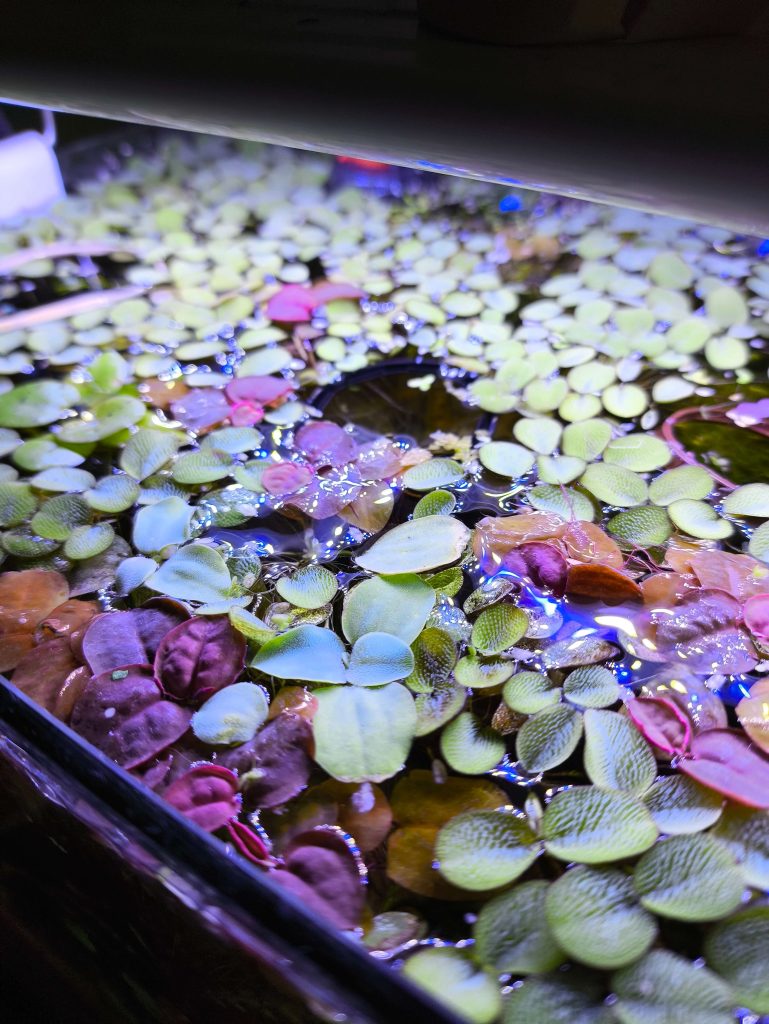
Before you go, check my shrimp game — just go home and wake up the shrimp.
Quick summary (save this)
– Low-tech usually means no pressurised CO2 and lower light, which slows plant growth.
– Lower energy tanks tend to be more forgiving and can reduce algae pressure.
– Success comes from matching light and nutrients to the natural CO2 available.
– Simple setup habits (stable placement, no soap cleaning, prep materials) prevent avoidable chaos.